

[The 2026 Perspective]
A Note from the Architect
On March 15, 2026, I am auditing the boundaries of my own empathy.
Most leaders mistake ‘feeling for others’ as a sign of strength.
In reality, it is a systemic vulnerability.
If you absorb the stress of your nodes, you lose the ability to regulate the system.
In the 2026 framework, we move from System 1 (Fast/Flooded) to System 2 (Grounded/Intentional).
My own challenge remains the ‘Boundary Rep’—learning that saying ‘no’ to emotional absorption is the only way to say ‘yes’ to effective leadership.
Empathy: From Sponge to Anchor
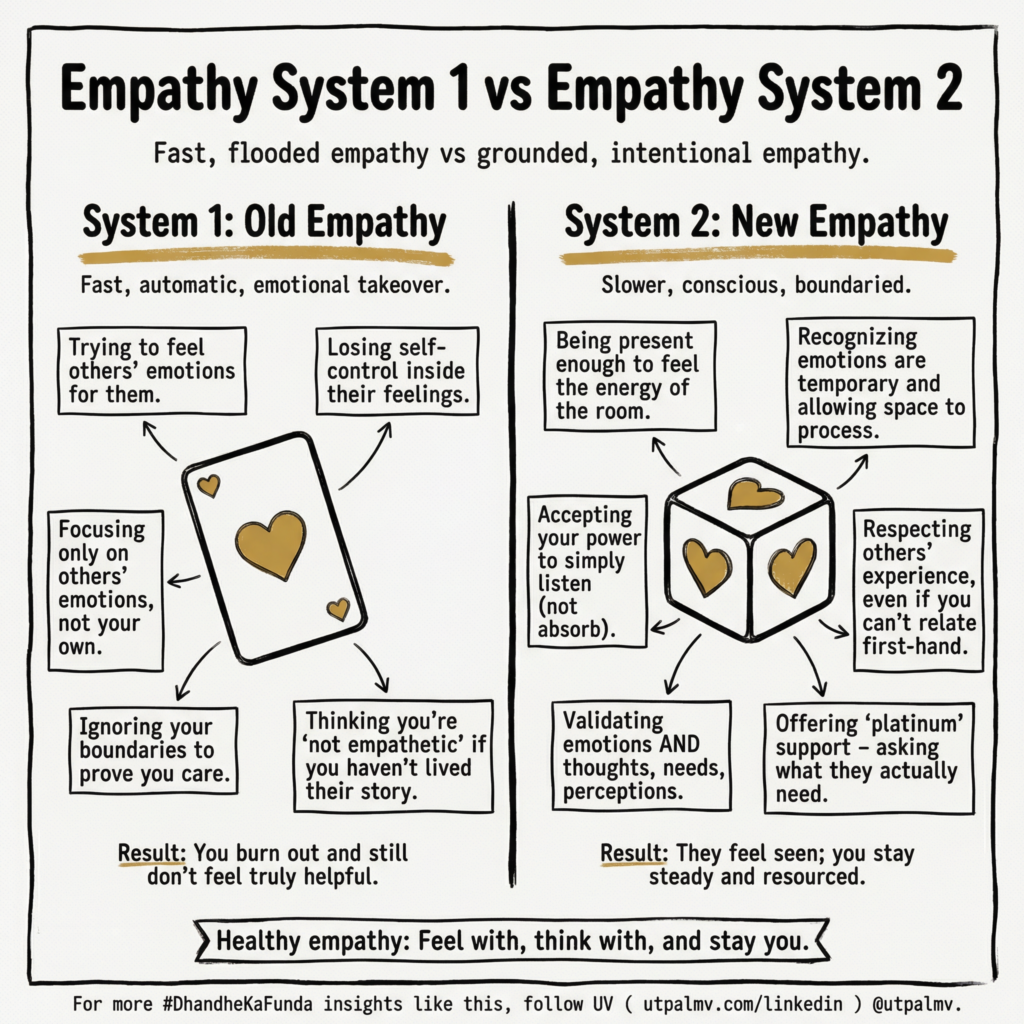
Empathy is an operating system, not a feeling. To maintain systemic throughput, you must transition from reactive emotional contagion to intentional structural support.
System 1: The Reactive Sponge (Old Empathy)
-
The Mechanism: Fast, automatic, and emotional. You attempt to inhabit the other person’s emotions, effectively losing your own center.
-
The Error: Ignoring personal boundaries as a performance of “caring.” This results in Systemic Burnout—the leader becomes as incapacitated as the node they are trying to help.
System 2: The Intentional Anchor (New Empathy)
-
The Mechanism: Slow, conscious, and boundaried. You are present enough to recognize the energy of the room without allowing it to infiltrate your own internal architecture.
-
The Logic: You validate emotions and thoughts without absorbing them. This allows you to offer “Platinum Support”—asking what the system actually needs rather than simply joining the panic.
The Sovereign Law
Healthy empathy is not drowning with the team; it is staying anchored so you can pull them to safety. You cannot lead a system you are lost within.